

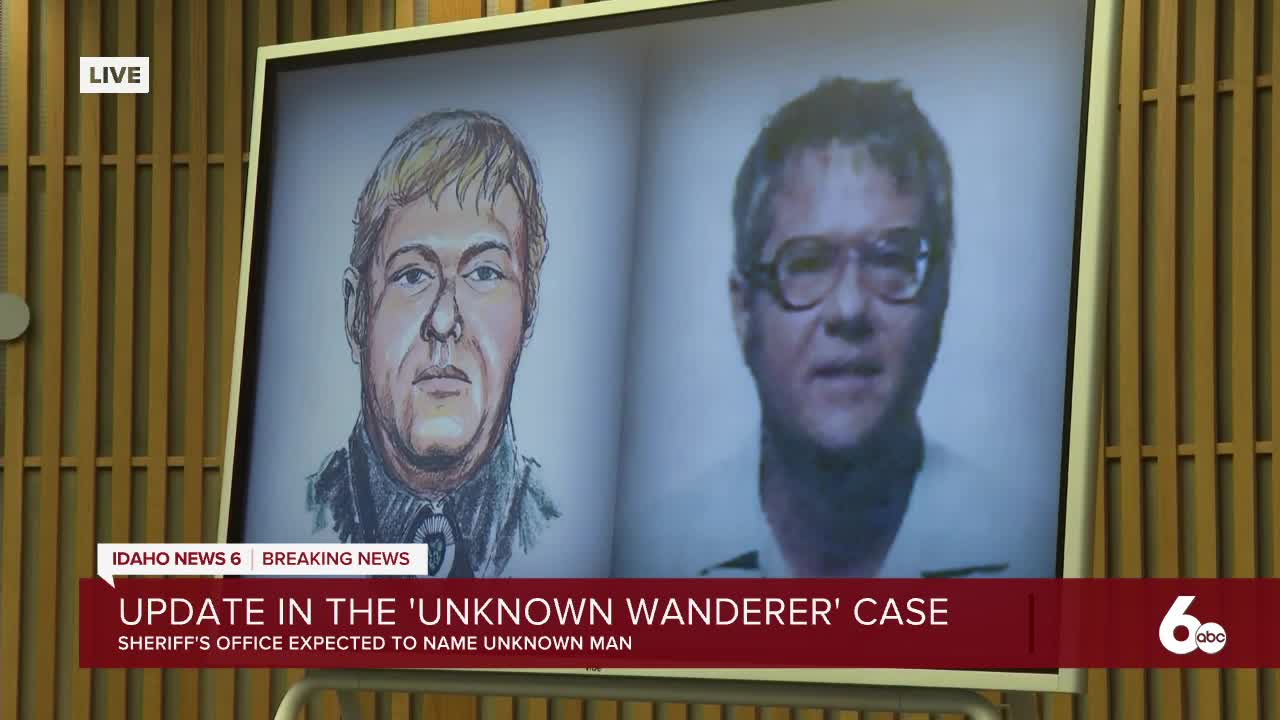


BOISE BENCH, Idaho — After 44 years, Ada County investigators have identified the man known as Boise’s “Unknown Wanderer.”
He was Dr. Mathew Francis Betkouski, an organic chemist from California who walked into Sacred Heart Catholic Church in Boise on Dec. 4, 1982, and was later found dead inside. His death was ruled a cyanide poisoning.
Investigators are now asking for new information about Betkouski’s life and movements before his death, including whether he had any connection to other cyanide deaths around the same time.
Watch Neighborhood Reporter Brady Caskey's breakdown of the announcement as he talks to a local detective and a forensic expert
Investigators also examined a possible connection between Betkouski and the 1982 Chicago Tylenol poisonings. Ada County officials are not formally naming him as a suspect in those killings, but they have shared their findings with investigators handling the Chicago case.
Watch Wednesday's full press conference from the Ada County Sheriff's Office in the video player below.
Ada County Cold Case Detective Tim Cooper said the sheriff’s office first became involved in the case in 2018 after a member of Sacred Heart Catholic Church reached out to investigators.
The case was reopened in 2019 and cross-referenced with more than 17,000 missing-person records, but officials say Betkouski had never been reported missing.
How did investigators identified him?
Investigators eventually focused on a key found with the man. Cooper said an etching on the key led them to Mills Court, a street in Jacksonville, Florida.
The sheriff’s office obtained property deeds connected to the location and found a 1989 death record. Investigators contacted a surviving family member, who told them his brother had gone missing in 1982 and was later declared dead in absentia.
A DNA sample was collected from the family member, who was living in Los Angeles. Cooper said the DNA showed the man and the Unknown Wanderer shared the same father, allowing investigators to confirm the Wanderer’s identity as Betkouski.
“This was an example of good citizens and experts coming together,” Cooper said.
Who was Dr. Mathew Francis Betkouski?
Cooper said Betkouski was a "brilliant man" who struggled to connect with people. He came from a prominent Los Angeles-area family. His grandfather had been president of the Los Angeles City Council and served as interim mayor at times.
Betkouski was an organic chemist with a Ph.D. Cooper said Betkouski had a documented fascination with chemistry and explosives from a young age and had put others at risk on more than one occasion.
In 1974, Betkouski suffered a traumatic brain injury, and Cooper said some of his concerning behavior became more pronounced afterward, including several incidents at his workplaces.
One such incident happened while Betkouski was working on a NASA-related project at Lockheed Martin in New Mexico. Cooper said that, according to a coworker, Betouski made a comment about how poison could be introduced into over the counter capsules, if a person wished to do so.
Betkouski later worked for a company in the Jacksonville area, where some of his co-workers reported concerns about him discussing the “perfect crime” and how cyanide could be used as a less messy means of taking his own life.
Cooper also said Betkouski was sometimes observed talking to himself and believed he was being tracked.
Investigators later found more clues about Betkouski’s interests and his connection to Chicago among belongings he left behind.
A few years ago, Betkouski’s brother died and surviving family members allowed investigators to travel to Los Angeles, where they learned the brother had kept many of Betkouski’s personal belongings in their childhood bedroom.
The room still contained Betkouski’s bed, dresser, desk and other personal effects from the room where he had lived. Cooper said Betkouski had visited the room in the late 1970s and early 1980s.
Inside Betkouski’s desk, investigators found photos, letters, his UCLA medical services card, a map of Chicago believed to have been made in the 1970s and a small bottle of cyanide with a handwritten label.
Cooper said the bottle contained sodium cyanide, not potassium cyanide, which was used in the 1982 Chicago-area Tylenol deaths.
Testing found organic material in the bottle, and investigators also found peach pits and apricot seeds with it. Cooper said investigators believe the cyanide was likely homemade.
He said the cyanide was not consistent with the substance used in the Tylenol deaths, based on the testing and an FDA analysis conducted in the 1980s.
A possible connection to the Tylenol killings
The items found among Betkouski’s belongings are among the details investigators examined while looking into a possible connection between him and the 1982 Chicago Tylenol poisonings.
Photos show Betkouski was in Chicago in December 1981, but investigators have not been able to place him in Chicago during the 1982 poisonings.
Ada County officials said they are not formally naming Betkouski as a suspect in the Chicago case. Instead, they shared their findings and evidence with investigators handling the Tylenol case in Chicago, who can use the information as part of their investigation, including to potentially rule Betkouski out or name him as a suspect.
Forensic psychiatrist Dr. Park Dietz said he believes Betkouski was the person responsible for the Tylenol killings.
READ MORE: After break in Boise cold case, daughter of Tylenol poisoning victim calls for release of records
Dietz spoke with Brady Caskey after the news conference saying in part, "I believe that the unknown wanderer is exactly the kind of person who would have committed the Tylenol murders... I’m convinced enough that I think I can put it to bed for me."
Dietz said he has presented information about Betkouski’s history and the sequence of events to groups of forensic psychiatrists, forensic psychologists and criminal profilers without identifying Betkouski or Boise.
Dietz said those groups largely agreed with him that Betkouski was a viable suspect in the Tylenol killings, with some participants saying they believed he was the person responsible.
“[They] overwhelmingly believed he was a viable suspect and even more were as convinced as I that Detective Cooper had solved the most important unsolved murder of my lifetime, the Chicago Tylenol murders,” Dietz said.
Investigators seek new leads
Investigators said identifying Betkouski is not the end of the case. They are asking anyone who may have information about his whereabouts, activities or possible connections to any suspicious cyanide deaths in 1982 to come forward.
If you have information that could help investigators, contact the Ada County Sheriff’s Office at ACSOTips@adacounty.id.gov.
A new Unsolved Mysteries documentary, “Unmasking the Tylenol Killer,” featuring this investigation is set to premiere in October.
Watch Ada County's full news conference below —
Watch below for archived Idaho News 6 coverage of the “Unknown Wanderer” case —
RELATED | Who was Boise’s ‘Unknown Wanderer’? His identity may finally be known
